When you have a business that is very successful and you believe it could be reproduced effectively, then it may possibly be a suitable candidate for franchising. Franchising is a simple and, potentially, very quick way of expanding your business that doesn?t require the same level of upfront capital as other expansion methods. Employing a professional services firm for some strategy consulting will help you decide if this is the right avenue for your business. Once you have decided to go ahead, there are plenty of things you should consider.
Is Your Business Suitable and Ready?
Confirming that you have the right concept is the first step. Is your business easily translatable?In other words, is it something that you can systematise, so that another person can operate it without your input, and will it be as successful in other locations?If so, you are on the right track. The next thing to consider is whether the business is one that will benefit from economies of scale.This is one of the key areas in which franchised businesses can make money. You also need to think about whether your business will appeal to both potential customers and franchisees.
Before going ahead with the franchising model, you need to be absolutely certain that the business is ready. If there are any gaping holes in your procedures, then rapid expansion will only serve to make them more obvious. Audit your business thoroughly, from finances to IT and from marketing to procurement. Only when you are happy that everything is running as smoothly as it can be,should you look to roll it out.
Know the Law
Franchised businesses are fairly complex legal entities. Make sure you understand all the relevant laws surrounding them and, specifically, your responsibilities with regard to your own business.
Decide on Your Model
Just as no two businesses are the same, nor are any two franchise models. There are many details for you to take into consideration. Some of the most important are:
The fees you will charge and the royalties you will take from franchisees.
The lengthof the franchise agreements you will offer.
The size territory you will award each franchisee.
The geographical areas your franchises will cover.
Training programs for franchisees.
The type of products and equipment that will be supplied to franchisees and which ones they will have to purchase from you.
Your marketing plan.
Recruit and Sell
Running a franchised business is a whole new enterprise, from running the original business out of which it grew. You will need employees to look after franchisees and make sure the whole organisation works effectively together. Hiring key members of staff is a critical step. Without them, you will struggle to get your franchised business off the ground.
Likewise, without franchisees, you are going nowhere, so you?d better figure out a sales plan pretty quickly. It is a good idea to have dedicated in-house salespeople to do this, because selling franchises can be very difficult. You are asking people to give up what they are currently doing ? and the security that comes with it ? in order to give you their money and work according to your rules! You need to have a very compelling argument to persuade them to do so, and you need compelling salespeople to make it happen.
Provide Support
Once your new franchises are up and running, you should provide adequate support to ensure that they thrive. Try to prepare for everything, by providing ongoing training on all aspects of the business, as well as efficient IT support services.
Is your PC not running as smoothly as it did when you first took it out of the box? A lethargic machine is oftentimes the result of a fragmented hard drive, an overabundance of junk files, and a Windows registry in disarray. If you'd like to put some pep in the step of your sluggish desktop or laptop, then check out TuneUp Utilities 2013. This application is designed to improve computer performance by tossing junk files, uninstalling unneeded programs, defragmenting the hard drive, and much, much more. Overall, the software does a fine job of revitalizing a worn PC, but the license limitations keep it from reaching the heights of the Editors' Choice award-winning Iolo System Mechanic 11.?
Getting Started Compatible with Windows 8, 7, Vista, and XP PCs, TuneUp Utilities 2013 requires just an Internet connection for activating the license and receiving updates. Unlike Iolo System Mechanics 11, the Editors' Choice among paid tuneup utilities, TuneUp Utilities 2012 limits you to only three installs. The free Comodo System Utilities?also lets users install the software on an unlimited number of PCs.
When you first fire up the program, you're prompted to run a system scan that will dig up registry and defragmentation problems, as well as other issues. Afterward, you can either run the one-click cleanup or go to the Start Center to check out all the features. I went with the latter option.
Features Start Center has a mostly blue-and-white tabbed interface that highlights five sections: Status & Recommendations, Optimize System, Clean Up Computer, Fix Problems, and Customize Windows. Each tab has several useful, clearly-defined functions that are easy for the layperson to understand. The Status & Recommendations tab, which is the app's default screen, displays the number of problems found under the Fix Problems sub-heading and the Start 1-Click Maintenance button under the Maintain System sub-head. At the bottom of the window is an Optimization Status band that fills as you complete the steps needed to whip your PC into shape. I found it a nice way to stay on top of the maintenance process.
TuneUp Utilities introduces two new tools in this year's release: TuneUp Disk Cleaner and TuneUp Browser Cleaner. The former removes left over bits when programs don't cleanly uninstall; the latter removes browser activity from the likes of Internet Explorer, Chrome, Firefox, and 22 other browsers.
TuneUp Uilities 2013 is more than a basic PC clean up application. It also contains many other functions including file backup and recovery, file deletion, Windows customization, and more. Some of the features duplicate native Windows function, but it's convenient to have them in one central location.
The Cleanup Process Clicking Start 1-Click Maintenance launches the system cleaner, which scanned my test bed and displayed numerous of registry problems, broken shortcuts, and other PC problems. Clicking the "Show Details" beneath each problem count took me to a new screen that described problems in everyday language. Clicking the Start 1-Click Maintenance button cleaned up the mess, eliminating all the previously listed problems.
I returned to the home screen after that task was completed, where I noticed that the Optimization Status bar was at 50 percent. Anxious to see it hit 100 percent, I began exploring TuneUp Utilities 2013's other options that freed up disk space and repaired a handful of problems. The application identified 41 programs that potentially should be disabled. I appreciated that TuneUp Utilities 2013 displayed star ratings culled from the application's user base that helped me quickly see which software that I should keep.
Performance Improvements I tested TuneUp Utilities 2013's ability to reinvigorate a PC by performing two tests?running the Geekbench system performance tool and measuring boot times?before and after running the software to compare the computer's potency. Each test was run three times and averaged. Before TuneUp Utilities 2013 scrubbed the system, the 2GHz Intel Core i7 X990 Style-Note notebook with 4GB of RAM and an 80GB Intel SSD drive achieved a 5,914 Geekbench score and booted in 50.3 seconds.
However, after using TuneUp Utilities 2012, the system saw improved performance. The GeekBench performance score rose to 6,428?just shy of Iolo System Mechanic 11's category leading 6,452 score. The boot time decreased to just 31.3 seconds, which topped Iolo System Mechanics 11's 31.7 second mark by a hair. Check out the performance chart below to see how TuneUp Utilities 2013 fared overall.
After running the tests, I used the computer extensively to get a sense of how the app had changed the responsiveness of the machine. Norton Utilities delivered a noticeable performance improvement; the entire OS moved at a snappier pace even with iTunes and Photoshop open.
Should You Use TuneUp Utilities 2013? Priced at $49.95, TuneUp Utilities 2012 is pricier than the free Comodo System Cleaner, but does a better job of removing the digital crud. Its Geekbench performance is strong, and it delivers improved performance that rivals Iolo System Mechanic 11. If you can overlook the fact that the software can only be installed on three PCs at a time (if you want to install it on more than three PCs, you have to buy two licenses, which will cost nearly $100), you'll find it quite a useful tool for improving computer performance.
More Utilities Reviews: ??? TuneUp Utilities 2013 ??? NeatCloud ??? IDriveSync ??? Onavo Extend 1.2.6 (for Android) ??? Insight Application Health Check ?? more
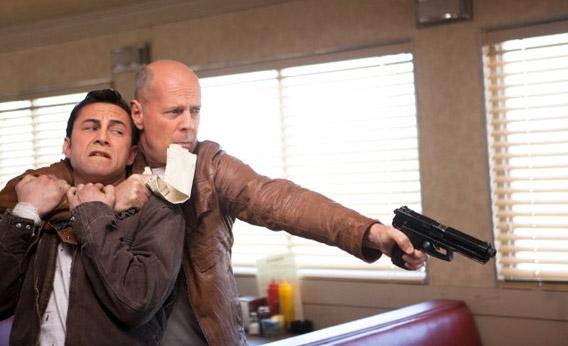
Photo by Alan Markfield/DMG Entertainment/Looper, LLC.
After you've seen Looper, come back and listen to our Spoiler Special podcast with Dana Stevens and Dan Kois.You can also download the podcast.
Looper is the third film from Rian Johnson, whose debut feature Brick (2005) somehow pulled off the brazen gimmick of setting a noir murder mystery in a suburban American high school. Joseph Gordon-Levitt (then known to most audiences as the alien kid on the family sitcom Third Rock from the Sun) played the lead role?a teenage Sam Spade investigating his girlfriend?s murder?with an alchemically perfect combination of hip detachment and wary melancholy. Gordon-Levitt was already a rising actor, having been singled out by critics in less-mainstream roles, like the gay drifter he played in Gregg Araki?s moody, unforgettable Mysterious Skin. But it was only after Brick that he began his steady rise toward household-name status, playing a lovelorn greeting-card designer in (500) Days of Summer, a brain-cancer patient in 50/50, and a credible action sidekick in both Inception and The Dark Knight Rises.
I?m an avowed JGL fan, so the prospect of Gordon-Levitt and Johnson working together again was enticing.?So?was Looper?s high-concept sci-fi premise: Gordon-Levitt plays a hired assassin whose targets are sent back in time from the future. It?s 2044, and time travel hasn?t yet been invented, but?to employ the future-perfect tense useful mainly for time-travel movies?it will have been invented in 30 years. By that point, a fearful, vaguely post-apocalyptic government will have forbidden any use of the technology ... so, to paraphrase the NRA bumper sticker, when time machines are outlawed, only outlaws will have time machines. Soon the contraptions (which look, pleasingly, like Jules Verne-era bathyspheres) are used solely on the black market, transporting the human garbage of the future back in time for the past to clean up. At least, that's how Joe (Gordon-Levitt) justifies to himself the fact that he makes his living waiting in deserted fields for hooded, cuffed men to appear out of nowhere so he can shoot them with a blunderbuss.
Underground assassins like Joe?members of an organized force led by menacing boss-from-the-future Abe (Jeff Daniels)?are known as ?loopers,? for the chilling reason that, after being paid handsomely and given an early retirement that lasts exactly 30 years, they themselves will be captured, sent back in time and killed, thus closing the ?loop? of their lives. As the film begins, a new crime lord, a fearsome gangster known as the Rainmaker, has taken over in the future and is issuing new orders about the existing loopers: He wants all their future selves sent back in time and killed immediately, preferably by the younger versions of themselves. (Why exactly this setup would be desirable was one plot point among many that eluded me. Given that the victims from the future are being sent back with their heads covered, why would it matter which looper killed whom?)
Joe?s featherbrained fellow looper Seth (Paul Dano), encountering his own later-self, isn?t able to bring himself to pull the trigger, and the man gets away, resulting in a very bad outcome for both present and future Seths (and the first of several extended bursts of stomach-churning violence). Joe resolves that, when and if his own future self appears in cuffs before him, he won?t hesitate to blow him away?but when that day comes and Joe?s future self turns out to be Bruce Willis, all bets are off.
Future Joe manages to knock Past Joe out cold, take his gun, and head out into the world to find and kill the child destined one day to grow into the Rainmaker. Based on a tip about the super-criminal?s date and place of birth, old Joe has narrowed the candidates down to three small children, one of whom (Pierce Gagnon) is the son of a lonely sugarcane farmer (Emily Blunt) in whose barn young Joe has taken shelter while on the run from Abe?s men, who are now hunting down both Joes with extreme prejudice.
You see where this is going: At some point, Young Joe and Old Joe are going to have to meet up and debrief about the 30 years that separate them, then decide whether they?re going to continue as allies or enemies. The moment this finally happens, in an Edward Hopper-esque diner in the middle of nowhere, was for me the movie?s high point. As they stare at each other in profile over two identical plates of steak and eggs, Willis and Gordon-Levitt, such different types both physically and temperamentally, make a strange sense as each others? time-traveling avatars, especially since we?re meant to imagine that Joe?s years of hard living to come will make him a coarser, tougher man in middle age. (Levitt was also fitted with facial prosthetics to make his fine-boned face more closely resemble Willis? craggier features. The nose works; the eyebrows are pushing it.) The diner scene also snaps with smart dialogue that playfully bats around sci-fi clich?s; asked by his 2044 self to explicate one of the paradoxes of time travel, 2074 Joe impatiently dismisses the question, insisting they have no time to ?start making diagrams with straws.?
Too bad, because a well-thought-out straw diagram might have been able to get me through the movie?s last half-hour, in which timeless philosophical questions of free will vs. destiny, nature vs. nurture, and utilitarian ethics (would you consider killing a child if you knew it meant saving countless future lives from the monster he might grow up to be?) get raised, then chucked aside as the story hurtles to a rushed, gory conclusion that leaves nearly as many plot holes as bullet holes. Saddest of all, after their juicy mid-movie encounter at the diner, Old and Young Joe hardly ever share the screen again, and when they do, it?s mostly to exchange terse remarks and gunfire.
Looper felt to me like a maddening near-miss: It posits an impossible but fascinating-to-imagine relationship?a face-to-face encounter between one?s present and future self, in which each self must account for its betrayal of the other?and then throws away nearly all the dramatic potential that relationship offers. If someone remakes Looper as the movie it could have been in, say, 30 years, will someone from the future please FedEx it back to me?
LONDON (Reuters) - Doctors should only test people for a new virus if they are very ill in hospital with a respiratory infection, have been in Qatar or Saudi Arabia and test negative for common forms of pneumonia and infections, the World Health Organisation said on Saturday.
The newly discovered virus from the same family as SARS has so far been confirmed in only two cases worldwide, one in a 60-year-old Saudi man who died from his infections, and another in a man from Qatar who is critically ill in a London hospital.
In updated guidance issued six days after it put out a global alert about the new virus, the WHO said suspected cases should be strictly defined to limit the need to test people with milder symptoms.
But it added anyone who has been in direct contact with a confirmed case and who has any fever or respiratory symptoms should also be tested.
The WHO said in a statement its new case definition was designed "to ensure an appropriate and effective identification and investigation of patients who may be infected with the virus, without overburdening health care systems with unnecessary testing."
The United Nations health agency said on Sunday a new virus had infected a 49-year-old Qatari who had recently travelled to Saudi Arabia, where another man with an almost identical virus had died.
The virus is from a family called coronaviruses, which also includes viruses that cause the common cold and SARS, or Severe Acute Respiratory Syndrome, which emerged in China in 2002 and killed around a tenth of the 8,000 people it infected worldwide.
INTENSIVE CARE
A spokeswoman for Britain's Health Protection Agency, where scientists analyzing samples from the Qatari man found a match with the fatal Saudi case last weekend and reported their finding to the WHO, said on Saturday the 49-year-old was still in intensive care.
He is being cared for at St Thomas's hospital, where he has been connected to an artificial lung to keep him alive.
The WHO says there is so far no evidence to suggest the potentially fatal virus spreads easily from person to person. Scientists say the genetic makeup of the virus suggests it may have come from animals, possibly bats.
The WHO has been collaborating with laboratories such as the HPA and another lab in the Netherlands which were responsible for the confirmation of new virus.
"These laboratories have been working on the development of diagnostic reagents and protocols which can be provided to laboratories that are not in a position to develop their own, and these are now available," it said.
But it stressed only patients who fulfilled strict criteria - including having severed respiratory syndrome, requiring hospitalization, having been in Qatar or Saudi Arabia or in contact with a suspected or confirmed case, and having already been tested for pneumonia.
"The essence is that this is not for people with coughs and colds," WHO spokesman Glenn Thomas told Reuters.
Six suspected cases in Denmark last week turned out to be false alarms and Thomas said it was important "to alleviate the burden of testing" by ensuring health authorities and members of the public understand the criteria for a suspected case. (Reporting by Kate Kelland; Editing by Sophie Hares)
Sept 28 (Reuters) - Health insurer Aetna Inc said on Friday it will pay for a greater number of patients to receive Provenge, a prostate cancer drug made by Dendreon Corp, sending Dendreon's shares up as much as 10 percent.
Aetna will now include patients with metastatic prostate cancer who have failed to respond to hormone therapy and whose disease has spread to the lungs or the brain.
Previously patients whose cancer had spread to the brain or lungs were not covered. Patients whose disease has spread to the liver were not covered in the past and are still not covered.
Dendreon officials were not immediately available for comment. Provenge was approved in the United States in April, 2010.
Copyright 2012 MedCity News. All rights reserved. This material may not be published, broadcast, rewritten or redistributed.
ScienceDaily (Sep. 27, 2012) ? A new study by Weill Cornell Medical College researchers shows that adolescents' reactions to threat remain high even when the danger is no longer present. According to researchers, once a teenager's brain is triggered by a threat, the ability to suppress an emotional response to the threat is diminished which may explain the peak in anxiety and stress-related disorders during this developmental period.
The study, published Sept. 17 in the early online edition of the Proceedings of the National Academy of Sciences (PNAS), is the first to decode fear acquisition and fear "extinction learning," down to the synaptic level in the brains of mice, which mirror human neuronal networks. Also, through human and rodent experiments, the study finds that acquired fear can be difficult to extinguish in some adolescents. By contrast, the study shows that adults and children do not have the same trouble learning when a threat is no longer present.
"This is the first study to show, in an experiment, that adolescent humans have diminished fear extinction learning," says the study's lead author, Dr. Siobhan S. Pattwell, a postdoctoral fellow at the Sackler Institute for Developmental Psychobiology at Weill Cornell. "Our findings are important because they might explain why epidemiologists have found that anxiety disorders seem to spike during adolescence or just before adolescence. It is estimated that over 75 percent of adults with fear-related disorders can trace the roots of their anxiety to earlier ages."
The study findings suggest there is altered plasticity in the prefrontal cortex of the brain during adolescence, with its inability to overcome fear, says the study's senior co-investigator, Dr. Francis Lee, professor of pharmacology and psychiatry at Weill Cornell Medical College, and an attending psychiatrist at NewYork-Presbyterian Hospital/Weill Cornell Medical Center.
"This study is the first to show activity, at the synaptic level, for both fear acquisition and fear extinction -- and we find that while these areas function well in both younger and older mice, neurons involved in fear extinction are not as active in adolescent mice," says Dr. Lee. "If adolescents have a more difficult time learning that something that once frightened them is no longer a danger, then it is clear that the standard desensitization techniques from fear may not work on them. This new knowledge about the teenage brain's synaptic connections not responding optimally will help clinicians understand that the brain region used in fear extinction may not be as efficient during this sensitive developmental period in adolescents."
Adolescent Mice Never Lose Their Fear Response
Fear learning is a highly-adaptive, evolutionarily conserved process that allows one to respond appropriately to cues associated with danger. In the case of psychiatric disorders, however, fear may persist long after a threat has passed, and this unremitting and often debilitating form of fear is a core component of many anxiety disorders, including post-traumatic stress disorders (PTSD).
Existing treatments, such as exposure therapy, are designed to expose an individual slowly to the cues associated with a perceived threat. This technique is used for a variety of fears, from wartime PTSD to fear of flying, as well as serious adolescent anxiety about school, says Dr. Lee, who treats, among others, patients with PTSD acquired during the World Trade Center collapse on September 11, 2001.
Anxiety disorders are increasingly being diagnosed in children and adolescents, but the success rate of fear extinction-based exposure therapies are currently not known in this population. This study aimed to discover if they could be effective -- and why or why not.
The human experiment was conducted at the Sackler Institute for Developmental Psychobiology at Weill Cornell in collaboration with its director, Dr. B.J. Casey, a study senior co-investigator, who is the Sackler Professor of Developmental Psychobiology and professor of psychology in psychiatry at Weill Cornell. In the experiment, a group of volunteers -- children, adolescents and adults -- wore headphones and sweat meters and were asked to look at a computer screen with a sequence of blue or yellow square images. One of the squares was paired with a really unpleasant sound. For example, 50 percent of the time the blue square would set off the noise.
If the participants acquired a fear of the noise, they showed increased sweat when viewing the image that was paired with it, says Dr. Pattwell. The same group was brought back the next day, and again viewed a sequence of blue or yellow squares, but this time there was no associated noise. "But teenagers didn't decrease their fear response, and maintained their fear throughout subsequent trials when no noise was played," she says. However, the researchers documented that, unlike the teens participating in this study aged 12-17, both children and adults quickly learned that neither square was linked to a noxious sound, and this understanding rapidly decreased their fear response.
The mouse experiment, which used standard fear conditioning common in these types of animal studies, obtained similar findings. Adolescent mice (29 days old) did not decrease their fear response to stimuli that no longer existed, but younger and older mice did. Interestingly, the adolescent mice never lost their fear response as they aged.
The research team then monitored the brains of mice as they participated in the experiment. With the assistance of study senior co-investigator, Dr. Ipe Ninan, an electrophysiologist at NYU Langone Medical Center who is an assistant professor of psychiatry, the research team found that the prelimbic region in the prefrontal cortex, the brain region that processes emotion, is activated during acquisition of fear, and the infralimbic prefrontal cortex is used to extinguish this fear association. While other groups have suggested that the prefrontal cortex plays a role in extinction, no one has shown that this activity is at the level of the synapse -- the connections between the neurons.
"In young and old mice, we see plasticity, which is activity in the infralimbic cortex, which helps the animals decrease their fear response when a threat no longer applies," says Dr. Pattwell. "Interestingly, we didn't witness similar activity in adolescent mice."
According to researchers there is much more to explore about the fear response and its decoding in human adolescents, such as whether genes contribute to susceptibility to altered fear learning, and most importantly, what can be done to help the adolescent population overcome fear.
"We need to investigate personalized approaches to treatment of these fear and anxiety disorders in teens," says Dr. Lee. "It is essential that we find a way to help teenagers become more resilient to the fear they experience during adolescence to prevent it from leading to a lifetime of anxiety and depression."
The research was supported by the Sackler Institute, the DeWitt-Wallace Fund of the New York Community Trust, the Irma T. Hirschl/Monique Weill-Caulier Trust, the International Mental Health Research Organization, the Burroughs Wellcome Foundation, the Pritzker Consortium, National Institutes of Health Grants and a Swiss National Science Foundation Grant.
Weill Cornell co-authors are Dr. St?phanie Duhoux, Dr. Catherine A. Hartley, David C. Johnson, Dr. Deqiang Jing, Mark D. Elliott, Erika J. Ruberry, Alisa Powers, Natasha Mehta, Rui R. Yang, Dr. Fatima Soliman, and Dr. Charles E. Glatt.
Share this story on Facebook, Twitter, and Google:
Other social bookmarking and sharing tools:
Story Source:
The above story is reprinted from materials provided by NewYork-Presbyterian Hospital/Weill Cornell Medical Center/Weill Cornell Medical College, via Newswise.
Note: Materials may be edited for content and length. For further information, please contact the source cited above.
Journal Reference:
S. S. Pattwell, S. Duhoux, C. A. Hartley, D. C. Johnson, D. Jing, M. D. Elliott, E. J. Ruberry, A. Powers, N. Mehta, R. R. Yang, F. Soliman, C. E. Glatt, B. J. Casey, I. Ninan, F. S. Lee. Altered fear learning across development in both mouse and human. Proceedings of the National Academy of Sciences, 2012; DOI: 10.1073/pnas.1206834109
Note: If no author is given, the source is cited instead.
Disclaimer: This article is not intended to provide medical advice, diagnosis or treatment. Views expressed here do not necessarily reflect those of ScienceDaily or its staff.
BRUSSELS (Reuters) - EU telecoms regulators spelled out on Thursday how they want to accelerate the use of "cloud" computing by public bodies and companies, in the hope of boosting the bloc's GDP by nearly 1 trillion euros through the next eight years.
Concerns about privacy and data loss have hampered the take-up in Europe of cloud computing, where customers' data is stored on remote servers that can be accessed from anywhere.
The European Commission wants to address such worries by getting experts to clarify tricky legal questions on data protection and to develop a global privacy standard, it said at a press briefing on Thursday.
"You shouldn't have to have a law degree to use the cloud," Neelie Kroes, the EU's Telecoms chief said.
"But today, many potential users think it's too complicated, too risky, or too untrustworthy."
European customers complain that many cloud contracts do not specify who is liable when data is lost. And a proliferation of different standards for privacy and security can be confusing.
Commission research shows cloud computing can cut companies' costs by up to 20 percent and groups like Amazon.Com Inc, Microsoft Corp, Google Inc and Salesforce.com Inc have been developing new products and services to attract business "in the cloud".
The EU executive also said implementing the strategy could yield 957 billion euros in increased EU GDP in the years through 2020, creating 3.8 million jobs.
But cloud vendors who have a hard time selling their services in Europe say the Commission's economic forecast may be too optimistic.
Servers in the EU's public sector are up to 90 percent under-used, Commission research shows. Ideally servers should work around the clock by having clients in different time zones.
"It's been really painful to grow in Europe," Justin Pirie from Mimecast, a British cloud vendor, told Reuters. His company is directing more business towards the United States after European clients insisted on using servers in their home country.
"For us that's half a million in investments per country," he said.
NATURAL CAUTION
Some U.S.-based companies report that deals with European customers often hinge on whether they trust the company with their data or not.
"There is a natural caution in Europe compared to some parts of the world and providers need to be clear about their responsible data management practices," said Microsoft's Mark Lange
Companies with servers in the United States say their customers fear their data will be intercepted under U.S. anti-terror law though those concerns might be overdone.
"If interception is so much of a concern they should not only avoid U.S. cloud providers, but also avoid using the UK telephone, the Internet, and the postal system," said Clive Gringas, from law firm Olswang.
Some EU-based vendors exploit these worries by publicly stating their non-compliance with U.S. anti-terror laws.
But Thomas Boue, director of the Business Software Alliance lobby group, worries such moves fragment a market that is already being chopped up along national lines.
Others see the attractions of being close to their users.
IT service provider Colt Group SA, which has 20 data centres in 10 countries, says financial clients like the London Stock Exchange appreciate the proximity of Colt's servers because it enables them to connect to the exchange in 100 microseconds to conduct high-frequency trades.
"The laws of physics tend to come into it," Steve Hughes, the company's cloud specialist said.
But cost-cutting in less well-off countries offers vendors some hope.
Greece, whose debt-ridden economy is under an EU/IMF rescue program, shows a bigger cloud appetite than its biggest European creditor, Germany.
"Maybe it's just that their hardware is coming up for renewal," Robert Jenkins, co-founder of Zurich-based hosting firm CloudSigma, said.
ScienceDaily (Sep. 25, 2012) ? By outfitting two British Columbia subspecies of Swainson's thrushes with penny-sized, state-of-the-art geolocators, University of British Columbia researchers have been able to map their wildly divergent migration routes and pinpoint conservation hotspots.
"Birds of a feather do not necessarily flock together," says Kira Delmore, a PhD student with UBC's Department of Zoology and lead author of the paper. "Our teams of thrushes took dramatically different routes to get to their wintering grounds, either south along the west coast to Central America, or southeast to Alabama and across the Gulf of Mexico to Columbia."
The study, to be published this week in the Proceedings of the Royal Society of London B, is the first to collect a complete year's worth of data from individual birds to document such a migratory divide.
"This detailed level of migration and stopover data helps us pinpoint vital feeding and rest habitats that the birds rely on at key points during their long journey -- just before crossing the Gulf of Mexico, for example," Delmore adds.
The researchers say the study also raises the possibility that migratory behavior may play a role in speciation, the process by which one species evolves into two.
"Given that migratory behavior is under genetic influence in many species of birds, these results raise the question of what hybrids between these two subspecies would do," says Darren Irwin, associate professor of Zoology at UBC and co-author of the paper. "One possibility is that hybrids would take an intermediate route, leading to more difficulties during migration. If so, the migratory differences might be preventing the two forms from blending into one."
Background
About Swainson's thrushes
Swainson's thrushes, with olive-brown feathers, lighter mottled undersides, and distinct light eye-rings, are typically 16 to 20 centimetres (seven inches) in length with a wingspan of 30 centimetres (one foot). They are not endangered.
Research methodology
UBC researchers caught 40 thrushes in June 2010 -- 20 each of a subspecies from Pacific Spirit Park near UBC in Vancouver and another from locations near Kamloops, B.C. The birds were lured into six-metre-wide mist nets with mating calls.
The geolocators used weigh 0.9 gram and with attachment materials they weight approximately four per cent of the body weight of a thrush.
Researchers then attached the newly invented geolocation devices, which record sunrise and sunset times, on the birds with special harnesses before releasing them. To collect the data, Delmore undertook the process in reverse a year later.
This research was funded by Natural Sciences and Engineering Research Council of Canada, Environment Canada, and the Wilson Ornithological Society.
Share this story on Facebook, Twitter, and Google:
Other social bookmarking and sharing tools:
Story Source:
The above story is reprinted from materials provided by University of British Columbia.
Note: Materials may be edited for content and length. For further information, please contact the source cited above.
Journal Reference:
Kira E. Delmore, James W. Fox, and Darren E. Irwin. Dramatic intraspecific differences in migratory routes, stopover sites and wintering areas, revealed using light-level geolocators. Proc. R. Soc. B, September 26, 2012 DOI: 10.1098/rspb.2012.1229
Note: If no author is given, the source is cited instead.
Disclaimer: Views expressed in this article do not necessarily reflect those of ScienceDaily or its staff.
(Reuters) - Research In Motion Ltd reported a smaller-than-expected quarterly loss on Thursday and the struggling BlackBerry maker managed to increase its cash pile in the run-up to the launch of its make-or-break line of next generation devices.
Having sufficient cash on hand is seen as crucial to a successful launch of RIM's line of revamped smartphones that will run on its new BlackBerry 10, or BB10, operating system.
The company has staked its future on BB10. A one-time smartphone pioneer, RIM has watched the BlackBerry lose market share in recent years to the likes of Apple Inc's iPhone and Samsung Electronics Co's Galaxy.
COMMENTARY:
TODD COUPLAND, ANALYST, CIBC WORLD MARKETS
"I think what (the result) says is it looks like RIM is starting to stabilize the platform, and then of course it will be how do the new products do once they bring them out.
"(Happy with the cash position) particularly when its going up in quarters when they're spending money to restructure. The reason it's going up is the services business is so profitable and generating cash still."
"The business need to stabilize and then whatever level that is, they need to get themselves to cash break even. Then they don't need to worry about it and they can focus on product development and marketing, positioning, branding and all that.
"They're not all the way through the restructuring, so I expect that's the goal, to get the company stabilized and roughly cash flow break even prior to BB10 launch."
COLIN GILLIS, ANALYST, BGC PARTNERS
"You still have revenue declining 31 percent on a year-over-year basis but it's certainly not the train wreck that a lot of people feared. They've got to make it through to BlackBerry 10, they've got north of $2 billion in cash, it's not going to be an issue, they still shipped 7 million units, but making it through to BB10 doesn't mean that it's going to get traction, but if it does it could be game on."
"It looks like ASPs moved up. I want to hear what they say about that. We'll have to see when they give us the formal breakout but I'm looking at $229 versus $206. That's a pretty sharp uptick."
"There is so much focus on 10 (but) there is room in the market for 7 products if you price them right and position them correctly as an entry-level phone. If they can get their costs right and get themselves profitable selling 7 million of the 7s they could have a nice little business right there."
"They live to fight another day. The problem is they are still going to lose many in the current quarter."
PETER MISEK, ANALYST, JEFFERIES
"It's very impressive. I didn't expect they could execute on the business given the models they have in the market, but they obviously did really well in emerging markets. They really, really did, so good for them, but unfortunately they're still five months away from their BB10 devices and we think that's probably too late for them. Nothing's really changed in our fundamental view but this was obviously excellent management execution."
"They targeted emerging markets where an iPhone or an Android device won't work, where the infrastructure can't handle the load, and a BlackBerry is a much better way of connecting to the system. They've been very intelligent about going after markets where the competition wasn't as strong."
PAUL TAYLOR, CHIEF INVESTMENT OFFICER OF FUNDAMENTAL EQUITIES, BMO ASSET MANAGEMENT, TORONTO
"The fact that (cash) was up, that they're not in a cash burn situation, and with the right-sizing of the workforce, presumably some of their expenses are being run more in line with their likely future reduced revenues. So from a financial performance perspective, it's probably a good outcome in the short term."
SHAW WU, ANALYST, STERNE AGEE
"Much better than feared, for sure. We had thought there was a chance this could happen, because everyone had been so negative and expecting a disaster.
"It's still bad, but it's a much smaller disaster than expected. These stocks all trade on expectations. Expectations were really low, and they were able to beat that."
"They shipped more than a million better than expected. They also lost a lot less money than expected, and the cash balance, even though they lost money, they were able to grow it slightly."
Sydney, Australia, September 27, 2012 ?(PR.com)? To better attend to the wide-ranging needs of many clients and partners, MYOB has invested heavily in upping the ante with its support and product/service information channels.
The technology company today launches 24?7 access to its local client support team for its business division?s SME products, reveals a significant update to the MYOB website and celebrates the unveiling of a new-look community forum.
Unlike many of its accounting solution competitors, MYOB already provides real-time technical support via phone, email, community forum, live chat and social media. As per the current support program, this is free for Cover and subscription clients and available on a pay-per-request basis for other clients. 20,000 MYOB professional partners ? accountants, book keepers, developers, certified consultants, retailers and resellers ? also attend to client needs all around Australia.
CEO Tim Reed says, ?As we move further into the cloud space with our business solutions, we?re driving innovation throughout our customer service channels to match. It?s a really important step for us to provide a greater range of more accessible, immediate support to those who rely on MYOB.
?We recognise business owners work beyond nine to five and look to us to support that, so we?ve been working towards 24 hours a day, seven days a week client service for some time. I?m delighted to say we?ve hired and trained a significant number of people to accommodate this and are recruiting more. They?ll deliver quality real-time around-the-clock support via phone, email and the web, from Melbourne and Christchurch.
?We?ve also invested in refreshing our website?s look, feel and information architecture. Extensive client-centred research, analysis and design drove the redevelopment of our homepage and product recommendation system. The result is a much more client-focused communication channel that is built with clients? needs considered first. And there is more to come ? the second half of this project will be completed just before we release our new AccountRight Live accounting solution to market.
?Our community forum has been redeveloped too, with its design modernised and restructured to better meet visitors? needs. One important change is the inclusion of an ?Ideas Exchange? ? a dedicated platform for clients and partners to submit product ideas and receive feedback from our product development team. We soft launched this one month ago and the response is terrific.?
For MYOB information, research results, business tips, discussions, client service and more visit http://myob.com.au, http://myob.com.au/blog and www.twitter.com/MYOBteam.
For further comment or other information please contact: Kristy Sheppard, MYOB Manager ? Public Relations P: 02 9089 9068 / M: 0407 450 860 / E: Kristy.Sheppard@myob.com
About MYOB Established in 1991, MYOB is now Australia?s largest business management software provider. Its 50+ products and services have been employed by more than one million businesses in Australia and New Zealand. MYOB serves businesses of all ages, types and sizes, delivering solutions that simplify accounting, payroll, client management, websites and much more. With a network of more than 20,000 accountants and other professional partners, it provides the support and tools that help make business life easier. Today, MYOB is extending its solutions online and delivering innovation through cloud computing, enabling clients to make smarter connections with their business partners and customers: http://myob.com.au/smarterconnections.
Contact Information: MYOB Ltd Angely Grecia 61 2 9089 9071 Contact via Email myob.com
Click here to read the full story: MYOB Extends Client Support to 24/7 and Revamps Online Presence
ScienceDaily (Sep. 25, 2012) ? According to a new study co-authored by Simon Fraser University economics professor Steeve Mongrain, parole board decisions can have a huge impact on whether or not prisoners are motivated to rehabilitate.
The Journal of Law, Economics and Organization, has just published their study "Rehabilitated or Not: An Informational Theory of Parole Decisions" online.
Mongrain and his colleagues argue that parole boards need to consider the length of prisoners' original sentences, as well as their behaviour in prison, in granting early parole and determining eligibility for parole review.
"Our research shows that inmates with short sentences aren't motivated to rehabilitate by enrolling in addiction recovery and skills-building programs if they're in line for early parole," says Mongrain. "But that's not surprising. What is really revealing is our finding that inmates with long sentences are also not motivated to rehabilitate if their parole eligibility is a long way off."
Mongrain says an important application of this finding is in the context of legislative changes to constraints in the justice system. Any changes to laws governing parole eligibility need to be evaluated in terms of their impact on prisoners' motivation to seek rehabilitation and ultimately the rate of recidivism in prison and society.
"Most people in prison are there precisely because of their lack of impulse control. So very long sentences combined with long waits for parole eligibility can cause impatient inmates to conclude that rehabilitation is not worthwhile," explains Mongrain. "Studies show recidivism is directly tied to prisoners' completion of addiction recovery and skills-building programs. If they're not motivated to take them then recidivism goes up.
"Contrary to punishment, which is the big stick in our justice system, parole is the carrot we offer to prisoners as an incentive to rehabilitate. If we make the carrot smaller by telling prisoners with long sentences that we're lengthening the time of their parole eligibility, then we destroy their incentive to reform."
The other co-authors on this study are Dan Bernhardt, an economics professor at the University of Illinois, and Joanne Roberts, an economics professor at the University of Calgary.
Share this story on Facebook, Twitter, and Google:
Other social bookmarking and sharing tools:
Story Source:
The above story is reprinted from materials provided by Simon Fraser University.
Note: Materials may be edited for content and length. For further information, please contact the source cited above.
Journal Reference:
D. Bernhardt, S. Mongrain, J. Roberts. Rehabilitated or Not: An Informational Theory of Parole Decisions. Journal of Law, Economics, and Organization, 2010; 28 (2): 186 DOI: 10.1093/jleo/ewq008
Note: If no author is given, the source is cited instead.
Disclaimer: This article is not intended to provide medical advice, diagnosis or treatment. Views expressed here do not necessarily reflect those of ScienceDaily or its staff.
Patient safety improves when leaders walk the safety talk Public release date: 26-Sep-2012 [ | E-mail | Share ]
Contact: Sara LaJeunesse SDL13@psu.edu 814-863-4325 Penn State
UNIVERSITY PARK, Pa. -- When nurses feel safe admitting to their supervisors that they've made a mistake regarding a patient, they are more likely to report the error, which ultimately leads to a stronger commitment to safe practices and a reduction in the error rate, according to an international team of researchers. In addition, when nurse leaders' safety actions mirror their spoken words -- when they practice what they preach -- unit nurses do not feel caught between adhering to safety protocols and speaking up about mistakes against protocols.
"Patient errors remain a major source of avoidable patient harm in the United States," said Deirdre McCaughey, assistant professor of health policy and administration at Penn State. "The Institute of Medicine report, 'To Err is Human: Building a Safer Health System,' charged that avoidable medical errors in U.S. hospitals kill at least 44,000 patients a year. Feeling comfortable reporting errors also leads to a stronger commitment to safe practices, which ultimately reduces error rate.
McCaughey and her colleagues examined the notion that care providers may experience a conflict between the strong enforcement of safety procedures on the one hand, and the reporting of safety/patient errors on the other hand.
"Despite this conflict, prior research indicates that a climate of safety requires both prioritizing existing safety protocols and constructive responses to errors," said the research team leader, Hannes Leroy of Katholieke Universiteit Leuven and the University of Calgary. "Achieving this balance highlights the importance of leadership to foster team priority of safety."
The researchers surveyed 54 nursing teams in four hospitals in Belgium to determine if the leadership actions of head nurses were aligned with the verbal expectations they had given to staff nurses, as well as to examine the effect of that congruence on nurse/employee commitment to following safe work protocols and willingness to report a patient treatment error. Six months later, the team then examined the relationship between fostering safety and reporting patient errors to determine if they were related to a reduction in errors regarding patients.
In their study, the researchers considered a team to be composed of one head nurse and a minimum of three nurses who reported directly to the head nurse. They distributed paper surveys to nurses and head nurses within the different nursing departments, and asked the nurses to deposit the surveys in a sealed box or envelope to assure anonymity.
The surveys examined the behavioral integrity of head nurses, the psychological safety felt by staff nurses, and team priority of safety using a variety of statements that participants ranked on a scale ranging from "completely disagree" to "completely agree." To examine the behavioral integrity of head nurses, the surveys included such statements as "My head nurse always practices the safety protocols he/she preaches." To examine the psychological safety felt by staff nurses, the surveys included such statements as "If you make a mistake in this team, it is often held against you." To examine team priority of safety, the surveys included such statements as "In order to get the work done, one must ignore some safety aspects." The researchers then analyzed the data using structural equation modeling.
The results appeared online this week in the Journal of Applied Psychology.
The researchers found that when nurse managers' spoken expectations regarding safety aligned with their commitment to safety, their teams had a stronger commitment to acting safely while carrying out work duties, as well as a greater rate of reporting errors. In addition, this greater emphasis on safety resulted in a reduction in patient treatment errors.
"The study offers support for the efficacy of leaders' behavioral integrity -- walking the talk, if you will -- and it demonstrates the importance of leadership in promoting a work environment in which employees feel it is safe to reveal performance errors," said McCaughey. "This benefits patients because work environments in which error is identified offer employees the opportunity to learn from those errors and, ultimately, prevent similar errors from occurring."
According to Leroy, the researchers' findings suggest that by staying true to the safety values they espouse, leaders can start to solve the managerial dilemma of providing clear safety directives while encouraging employees to report errors.
"This is important as the results of our study indicate that the combination of both a high priority of safety and a psychologically safe working environment predicts the number of reported patient errors in hospitals," Leroy said.
###
Other authors on the paper include Bart Dierynck of Tilburg University, Frederik Anseel of Ghent University, Tony Simons of Cornell University, Jonathon R. B. Halbesleben of the University of Alabama, Grant T. Savage of the University of Alabama at Birmingham and Luc Sels of Katholieke Universiteit Leuven.
[ | E-mail | Share ]
?
AAAS and EurekAlert! are not responsible for the accuracy of news releases posted to EurekAlert! by contributing institutions or for the use of any information through the EurekAlert! system.
Patient safety improves when leaders walk the safety talk Public release date: 26-Sep-2012 [ | E-mail | Share ]
Contact: Sara LaJeunesse SDL13@psu.edu 814-863-4325 Penn State
UNIVERSITY PARK, Pa. -- When nurses feel safe admitting to their supervisors that they've made a mistake regarding a patient, they are more likely to report the error, which ultimately leads to a stronger commitment to safe practices and a reduction in the error rate, according to an international team of researchers. In addition, when nurse leaders' safety actions mirror their spoken words -- when they practice what they preach -- unit nurses do not feel caught between adhering to safety protocols and speaking up about mistakes against protocols.
"Patient errors remain a major source of avoidable patient harm in the United States," said Deirdre McCaughey, assistant professor of health policy and administration at Penn State. "The Institute of Medicine report, 'To Err is Human: Building a Safer Health System,' charged that avoidable medical errors in U.S. hospitals kill at least 44,000 patients a year. Feeling comfortable reporting errors also leads to a stronger commitment to safe practices, which ultimately reduces error rate.
McCaughey and her colleagues examined the notion that care providers may experience a conflict between the strong enforcement of safety procedures on the one hand, and the reporting of safety/patient errors on the other hand.
"Despite this conflict, prior research indicates that a climate of safety requires both prioritizing existing safety protocols and constructive responses to errors," said the research team leader, Hannes Leroy of Katholieke Universiteit Leuven and the University of Calgary. "Achieving this balance highlights the importance of leadership to foster team priority of safety."
The researchers surveyed 54 nursing teams in four hospitals in Belgium to determine if the leadership actions of head nurses were aligned with the verbal expectations they had given to staff nurses, as well as to examine the effect of that congruence on nurse/employee commitment to following safe work protocols and willingness to report a patient treatment error. Six months later, the team then examined the relationship between fostering safety and reporting patient errors to determine if they were related to a reduction in errors regarding patients.
In their study, the researchers considered a team to be composed of one head nurse and a minimum of three nurses who reported directly to the head nurse. They distributed paper surveys to nurses and head nurses within the different nursing departments, and asked the nurses to deposit the surveys in a sealed box or envelope to assure anonymity.
The surveys examined the behavioral integrity of head nurses, the psychological safety felt by staff nurses, and team priority of safety using a variety of statements that participants ranked on a scale ranging from "completely disagree" to "completely agree." To examine the behavioral integrity of head nurses, the surveys included such statements as "My head nurse always practices the safety protocols he/she preaches." To examine the psychological safety felt by staff nurses, the surveys included such statements as "If you make a mistake in this team, it is often held against you." To examine team priority of safety, the surveys included such statements as "In order to get the work done, one must ignore some safety aspects." The researchers then analyzed the data using structural equation modeling.
The results appeared online this week in the Journal of Applied Psychology.
The researchers found that when nurse managers' spoken expectations regarding safety aligned with their commitment to safety, their teams had a stronger commitment to acting safely while carrying out work duties, as well as a greater rate of reporting errors. In addition, this greater emphasis on safety resulted in a reduction in patient treatment errors.
"The study offers support for the efficacy of leaders' behavioral integrity -- walking the talk, if you will -- and it demonstrates the importance of leadership in promoting a work environment in which employees feel it is safe to reveal performance errors," said McCaughey. "This benefits patients because work environments in which error is identified offer employees the opportunity to learn from those errors and, ultimately, prevent similar errors from occurring."
According to Leroy, the researchers' findings suggest that by staying true to the safety values they espouse, leaders can start to solve the managerial dilemma of providing clear safety directives while encouraging employees to report errors.
"This is important as the results of our study indicate that the combination of both a high priority of safety and a psychologically safe working environment predicts the number of reported patient errors in hospitals," Leroy said.
###
Other authors on the paper include Bart Dierynck of Tilburg University, Frederik Anseel of Ghent University, Tony Simons of Cornell University, Jonathon R. B. Halbesleben of the University of Alabama, Grant T. Savage of the University of Alabama at Birmingham and Luc Sels of Katholieke Universiteit Leuven.
[ | E-mail | Share ]
?
AAAS and EurekAlert! are not responsible for the accuracy of news releases posted to EurekAlert! by contributing institutions or for the use of any information through the EurekAlert! system.
(Reuters) - MetLife Inc and General Electric Co have tweaked the terms of a deal in which the U.S. life insurer is selling $7 billion in bank deposits to the conglomerate, a move MetLife said would change the regulator in charge of approving the deal.
The Office of the Comptroller of the Currency will now be responsible for approving the deal, first announced in December, rather than the Federal Deposit Insurance Corp, MetLife said in a filing with the U.S. Securities and Exchange Commission late on Friday.
Under the new structure, GE Capital Retail Bank, rather than GE Capital Bank, will buy MetLife's banking deposits - a move GE's finance arm is making to become less dependent on sales of commercial paper and bonds.
The retail bank is regulated by the Comptroller of the Currency, while GE Capital Bank answers to the FDIC, said GE spokesman Russell Wilkerson.
One brokerage said the delays appeared to be related to the GE side of the deal, and that the change may expedite the process.
"Our understanding has been that the FDIC has been requiring additional information from GE Capital Bank, not from (MetLife), and that this has been holding up the approval process," Sandler O'Neill said in a note on Monday. "The OCC was also involved in the prior review, so we believe that an approval of the sale to a different subsidiary of GE Capital may take less time."
GE's Wilkerson declined to comment on whether the FDIC had been slow to approve the deal. An FDIC spokesman had no immediate comment on whether the change would accelerate the process.
GE'S DEPOSIT SHIFT
Prior to the 2008 financial crisis, GE Capital's strategy was to trade on its parent company's then-"AAA" credit rating to borrow money at low interest rates and then lend it out at higher rates.
However, the giant industrial company lost that top-notch credit rating during the crisis - Standard & Poor's now rates it "AA+" while Moody's Investor Service has an "Aa3" rating on the company - making that a less appealing strategy. GE has also sought to limit its dependence on borrowing. Chief Executive Jeff Immelt said in May the company aims eventually to cut the amount of short-term commercial paper it issues to $25 billion, down from $43 billion at the end of the second quarter and $105 billion in early 2008 before the financial crisis.
Acquiring MetLife's deposits would give GE a "low-cost funding source," said analyst Brian Langenberg of Langenberg & Co.
METLIFE WANTS TO MOVE ON
MetLife is eager to get rid of its banking operations so it can move forward with a plan to raise its dividend and buy back shares, a move the Federal Reserve has thwarted repeatedly.
The Fed blocked MetLife last autumn on the grounds that the company should face stress testing, and then again earlier this year after the company failed those stress tests. Senior MetLife executives argued in response that the Fed should not be using bank metrics to evaluate insurers, but to no avail.
The largest life insurer in the United States has already shut down its mortgage operations, and after selling the deposits business, would be able to surrender its bank holding company charter.
With the bank charter out of the way, analysts expect MetLife to raise its dividend about 49 percent and to buy back around $2 billion in stock.
MetLife's shares rose 1.5 percent to $35.40 in afternoon trading, outpacing the rest of the sector. The stock is up 13.6 percent in 2012, underperforming gains of nearly 16 percent for the S&P insurance industry index.
GE was down 16 cents at $22.37 on the New York Stock Exchange, roughly in line with its peers. Its shares have risen almost 26 percent since the start of the year, more than double the 11 percent rise of the Dow Jones industrial average.
(Reporting By Scott Malone and Ben Berkowitz in Boston, additional reporting by Emily Stephenson in Washington; Editing by Maureen Bavdek)
 When you have a business that is very successful and you believe it could be reproduced effectively, then it may possibly be a suitable candidate for franchising. Franchising is a simple and, potentially, very quick way of expanding your business that doesn?t require the same level of upfront capital as other expansion methods. Employing a professional services firm for some strategy consulting will help you decide if this is the right avenue for your business. Once you have decided to go ahead, there are plenty of things you should consider.



 Copyright 2012 MedCity News. All rights reserved. This material may not be published, broadcast, rewritten or redistributed.
![[ Back to EurekAlert! ]](http://www.eurekalert.org/images/back2e.gif) Public release date: 26-Sep-2012
Public release date: 26-Sep-2012 Share ]